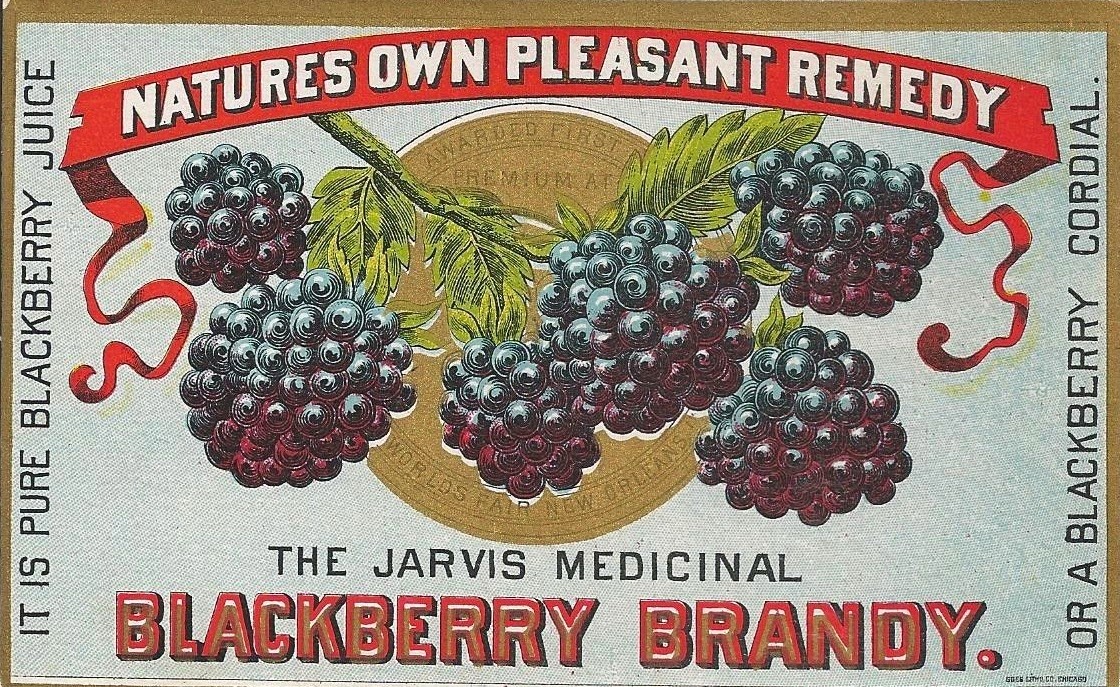


 Between 1860 and 1920, advertising strategies for two products almost singlehandedly changed the face of consumer culture in the United States—or so Cary Nelson and P&PC claim in "American Advertising: A Poem for Every Product," which is Chapter 7 in the newly-released, 700-page tome U.S. Popular Print Culture 1860-1920 (Volume 6 of Oxford's History of Popular Print Culture series). At $160, the book's no cheapie (maybe Oxford needs a jingle or two to help advertise it?), but Nelson and P&PC offer ten images from their private collections and lots of great verse to show how poetry—a genre that many people associate with anticapitalist endeavors—fueled the development of the advertising industry and paved the way for a myriad of advertising techniques we're familiar with today.
 In "A Poem for Every Product," Nelson and P&PC argue that, while poems were used to pitch everything from galoshes to carriages, two consumer items in particular—patent medicines and soap—deserve special credit (or blame) in powering the development and expansion of the American advertising industry and its poetry, as U.S. poets found at that conjunction the possibility for regular incomes and audiences appreciative of their skills. In the writing of this essay, Nelson took on the subject of patent medicines while P&PC picked up on the issue of soap (a topic we've addressed on this blog before), and we found the two products to be intimately related, as soap assumed the dominant place in advertising that patent medicines occupied prior to the Progressive Era's truth-in-advertising movements that culminated, in part, in the Pure Food and Drug Act of 1906. The shift from snake oil to soap—two items with simple recipes that needed advertising to differentiate one brand of similar material from another—was complicated and not accomplished overnight, but one of the poets helping it along was the phenomenally successful Canadian writer and artist Palmer Cox. Thus, Cox serves as a sort of fulcrum in "A Poem for Every Product," a moment halfway through the essay when Nelson's argument about patent medicines transitions to P&PC's thoughts about soap. Here, in the way of a preview of that essay, follows an excerpt from the moment in "A Poem for Every Product" when the shady business of advertising starts relying on soap to help, uh, clean up its act:
 "In 1890, five years after writing 'Wisdom in Fable' for Pond's Extract, Palmer Cox [pictured here] produced 'A Friendly Turn' to advertise Ivory Soap for Cincinnati's Procter and Gamble Company. There, in four pages of his trademark tetrameter couplets and whimsical pen and ink illustrations, Cox called on his 'Brownies' to spin a tale of Ivory's elfin origin, purity, and medicinal qualities. While not as universal in its application as Pond's—which in 1885 had purported to resolve a range of skin ailments in addition to 'Sore Throat, Rheumatism, Wounds, Catarrh, Hemorrhages, Nose Bleed, Sprains, [and] Swellings'—Ivory is nonetheless credited with the ability to treat people's 'scabby heads,' 'unsightly pimples,' 'scaly crust,' and 'body sore.' Like a miracle cure, the 'pure and perfect' Brownie concoction works its transformative magic almost overnight:
No more were seen the scabby heads,For people suffering, Cox writes, as if pitching the merits of a patent medicine, 'Their sole relief and only hope / Is found in using Ivory Soap.'
Or finest garments all in shreds,
No more unsightly pimples rose,
To mar the chaps, or scaly crust,
Made people wish themselves in dust.
For, from the infant on the breast,
To those who neared their final rest,—
For rich and poor, the great and small,
Found Ivory Soap had cleansed them all.
 "The apparent ease with which Cox moves—or has been moved—between patent medicine advertising and soap advertising is in part an indication of his poetry's general marketability and public appeal, but it's also emblematic of a larger, conceptual shift that took place in American advertising in the last decade of the nineteenth century. That shift—which occurred as the age of patent medicine advertising was coming to an end—saw advertisers seize on and redeploy the curative rhetoric of nostrum advertising in order to market other consumer goods as well. In promoting a transformative power inherent to the commodity item, this new strategy not only contributed to the further fetishization of goods in the new 'modern' consumer economy by further obscuring the labour relations of their production. It also publicized the notion that the commodity item was itself a cure for people's many and varied ills—promising to be not just a physical good with a specific use, but a shortcut to social status, sex appeal, or lifestyle—and that the corresponding act of buying and consuming was a medicinal activity in its own right. That is, in the expansion of patent medicine advertising strategies more broadly at this time, we can see the birth of what we now call 'retail therapy.'
 "That expansion didn't happen all at once, nor did it happen equally from product to product. Indeed, restructuring the logic of consumption and Americans' relationship to commodity items in this way required a tangible form of what Fredric Jameson would call a 'vanishing mediator'—that entity which 'serves as a bearer of change and social transformation, only to be forgotten once that change has ratified the reality of the institutions.' In the case of American consumer capitalism, that signal mediating product was soap, partly because soap had been included in the patent-medicine industry for a long time [it was oftentimes an ingredient in nostrums], and partly because it provided an outward performance—taking something dirty and making it clean—of the transformative character that advertisers hoped would eventually become linked in the American psyche to every other product....So twinned were the discourses of patent medicine and soap at the end of the nineteenth century that at least one nineteenth-century producer of nostrums—Palmer Cox's patron, Pond's Healing and Pond's Extract—was able to respond to the Pure Food and Drug act by transforming itself almost immediately into a skin-care cleansing specialist, Pond's Cold Cream, which is still on the market today."
 Oliver Wendell Holmes, Sr. (1809-1894) wrote "The Deacon's Masterpiece, or The Wonderful 'One-Hoss Shay'" in 1858. Around 1876, the noted Philadelphia carriage builders, D.M. Lane & Son, reprinted the poem inside a small cardboard pamphlet (pictured here) advertising their company's "Large Stock of Light and Heavy Carriages, of the Newest Designs and Finest Finish"—coaches, coupes, rockaways, bretts, phaetons, buggies, drags, and Jenny Lind carriages including the 1876 Centennial Road and Speed Wagon featured on front.
 Holmes (pictured here) was nationally known, of course; a physician-professor at Harvard, writer of The Autocrat of the Breakfast Table essays that first ran in The Atlantic Monthly, and author of "Old Ironsides," he was one of the six Fireside Poets whose picture graced the hearths of homes around the country. D.M. Lane & Son was no slouch either, as it turns out. If people were setting Holmes's picture on the mantle, then it was likely that many of them sat themselves in vehicles made or designed by the Lane establishment.
 After the death of his father "Captain" Lane—who had started out as a blacksmith, had led a group of one hundred men to fight in the Civil War, and who died suddenly in 1882—son Millard (ahem) took the company's reigns and presided over a period of rapid innovation and expansion in carriage construction and design. In 1893, Millard was appointed President of the Carriage Builders' National Association, praised for his progressive attitude and business methods as well as the company's "splendid factory and spacious ware-rooms." "Mr. Lane is a man," Carriage Monthly wrote, "of fine personal appearance, with a measure of dignity in his bearing that does not interfere with his frank and genial manners." Hub magazine agreed. "He is an energetic, painstaking business man, to whom work is a pleasure ... In social life he is equally popular, and his fitness and ability have led to his connection with various local organizations."
 Millard would helm the family business until his own death in 1901—the same year that Mr. Ransom Olds opened his first assembly line plant to speed up and streamline the manufacture of the Oldsmobile Curved Dash, the first mass-produced automobile in history. Of course, the carriage industry did not disappear overnight—it would take another ten or fifteen years for Henry Ford to fully refine and harness the potential of the assembly line—but the transition was a remarkably fast one nonetheless. By 1914, cars were coming off of Ford's assembly line so quickly that the painting process caused a bottleneck (only black paint would dry fast enough to keep pace with manufacturing), and the cost of a single automobile dropped to almost half of what it was six or seven years earlier. According to Wiki, by 1914 it was taking only 93 minutes to assemble a car at Ford's factories, and an assembly line worker could purchase a Model T with four months' pay.
 In retrospect, then, can we read in Millard's death and the "end of the wonderful one-hoss shay" the fate of D.M. Lane's carriage business writ large—indeed, not just the fate of the particular industry that the Lanes helped to drive, but in relation to every boom-and-bust cycle since? Here are the poem's final two stanzas, in which the parson's carriage—a prescient metaphor for what happens when one puts too much trust in the modern economy's claims to flawlessness and permanence—"went to pieces all at once":
 It is fairly common for today's literary critics to imagine the Fireside Poets, including Holmes, to be voices of convention who were intellectually and poetically disabled by their nostalgia for a rural, religiocentric America and intense suspicion of the pace, technological invention, and changing values of modern life. "Ultimately," John Timberman Newcomb explains in Would Poetry Disappear? American Verse and the Crisis of Modernity, for example, "their refusal to accept the idea that poetry should, or could, grapple with the sources and effects of modern emotional dispossession not only damaged their own reputations, but seriously undermined poetry's place in American life." We here at P&PC aren't going to claim that the Fireside Poets weren't invested in pre-modern values and lifestyles, but maybe—as the bursting bubble that dispossesses the parson of his carriage in "The Wonderful 'One-Hoss Shay'" suggests—they weren't entirely blind to the character of modernity, either, nor did they refuse to have their poetry engage or analyze its dynamics. Holmes's parson, after all, is not unlike many homeowners in today's America—surprised at "the hour of the Earthquake shock" to find himself out in the cold and sitting on a rock. One can only hope he had paid off his carriage before that bubble burst.
 A few weeks ago, one of P&PC's poetry scouts wrote in with exciting news: she'd just purchased a bright orange StarMark Everlasting Bento Ball toy for her newly-adopted dog named Ayla (both pooch and product pictured here) and had discovered a little 6-line poem printed on the back of the toy's packaging:
 Panting with anticipation and curious about how and why poetry came to appear in such an unexpected place, P&PC put its sleuthing nose to the pavement and tracked down Emily Benson, Marketing Director for StarMark Pet Products, a retail arm of the Triple Crown Dog Academy which is the largest, most comprehensive training, behavior, and pet-related event center in the world. With a 100,000 square-foot facility, a 200-kennel boarding kennel, and a two-mile training trail located in Austin, Texas, Triple Crown obviously knows man's best friend quite well. But could Benson give P&PC readers something to chew on? Or did the poem have us barking up the wrong tree? Here's what Benson had to say about dogs, cats, poetry, doggerel and the unfortunate fact that the poems are in the process of being phased out.
 Poetry & Popular Culture: Poems on chew toys? How did the idea come about?
 P&PC: Who writes them? Like, do you have a poet on staff or something?
 P&PC: Last time I wrote poetry on the job, I got reprimanded, so I quit and went to graduate school. What advice would you give other cubicle poets when it comes to making poetry part of their work?
 P&PC: What's your favorite chew-toy poem?
 P&PC: The poems are written from different points of view and for different audiences. The poem for the Everlasting Treat Ball (being gnawed on in the picture here), for example, is from a dog's perspective and addressed to other dogs:
 P&PC: Um, P&PC has an office cat. What are StarMark's plans for a feline product line?
 From noon to 10 pm this coming Saturday, September 25th, Gilgamesh Brewing and Wandering Aengus Cider Works will be hosting Salem's first Beer & Cider Festival at the Mission Mill Museum located at 1313 Mill Street, just a hop (ahem), skip and a jump from the campus of Willamette University. The P&PC Office is excited. Sure, we took a field trip to the 24th annual Oregon Brewers Festival this past July where we sampled our fair share of the more than 80 craft beers that were on tap in that well-established, world-renowned frothy juggernaut of a fest. But there's something particularly special about Salem's startup, and not just because it's taking place, somewhat audaciously, in the shadow of Portland's hipster paradise and in a capital city that gets short shrift in all the guidebooks. Maybe—just maybe—it also has to do with a certain poetic element that's been in the Salem beer mix, along with all those locally-grown hops, going on for nigh 100 years.
 Take the acrostic pictured to the left, for example: a May, 1911 advertisement issued by the Salem Brewery Association, which came across our desktops via a mysteriously anonymous blogging friend (and purveyor of the fascinating and arcane) over at Capital Taps. It's a clever bit of acrostic puffery in which the vertically-oriented phrase "Salem Beer" becomes the grammatical subject of virtually every line even as its component letters begin those lines. That is, the letters in "Salem Beer" are being put to three separate uses: as (ahem) the capital beginning each line, as the aggregate subject of each statement about beer's healing powers, and as a sort of bold-faced neon light for "Salem Beer" that signifies independent of the poem as it's printed vertically down the page. This is how an acrostic is supposed to work, right? It's a poetic form that exploits the tendencies of language to serve multiple purposes simultaneously and, in revealing embedded texts and encoded messages, encourages us to read against the page's grain if not between the lines.
 Once licensed to read this way, readers will find the "Salem Beer" ad to be an unex- pectedly rich verbal habitat. For example, who can mistake that the first word one comes to when reading down the page is the "Sale" going on in "Salem"—a perfectly appropriate description of the result that the ad seeks to effect? In fact, the very alcoholic bevvie which is the subject of the local market transaction—ale—is itself embedded in the city's name, so that by the time the "M" in Salem finally comes around, the Salem Brewery Association has more or less encapsulated its core message in five letters: it's a sale on ale in Salem. Mind you, this sort of creative play in which meanings melt—or should it be malt?—into one another isn't unique to this ad. A more recent local movement to "Keep Salem Lame" has more or less read the city's name in the same way but to different results; just as the Brewery Association saw its product inherent in Oregon's capital, so some locals see the city's true identity there as well.
 What we like even more about this ad, however, is the homonym for "ale"—that is, "ail"—which the acrostic poem itself takes up as the very problem for which Salem Beer is a purported remedy. Once we begin reading horizontally through the acrostic—with the grain—we come upon the healing powers that Salem Beer supposedly has: it invigorates, lends strength to the weak and wearied physique, is a cure for the nervous ills of life, restores people to full strength, etc. In short, Ale is the cure for what Ails you. It might strike some as a crazy claim for the Brewery Association to make, but in an age when alcohol was the primary ingredient in most patent medicines and snake oil cures, the mythical healing powers of alcohol were well embedded in the cultural psyche, not just in the word "Salem."
 There's at least one more, likely uncon- scious, effect that the Brewery Associ- ation's acrostic would have had on its 1911 audience, however. As Leon Jackson reminds us in his awesome study The Business of Letters: Authorial Economies in Antebellum America (2008), acrostics were a popular "if juvenile, form of courtship poetry" in the antebellum U.S. It's no surprise, for example, that the 19th century advertising trade card pictured here—showing a dashing lad wooing his beloved by handing her a packet of B.T. Babbitt's soap—contains an acrostic on back (see below) constructed via the name of the company's flagship product "BT Babbitts Soap." That acrostic, titled "The Man" and extolling the virtues of the esteemed Mr. B.T. Babbitt himself, begins:
 Capitalizing on the cultural association of acrostic poetry with courtship— an association that the illustration on the card is designed to trigger—Babbitt's Soap effectively casts the producer-consumer relationship as a romantic one and the act of shopping as a lovemaking endeavor more broadly. It may seem a stretch to say that the Salem Brewery Association is following in Babbitt's acrostic footsteps by sexing up the prospective buyer of Salem beer. But in its promise of "restor[ing] man to fulness of strength and activity," doesn't this beer ad sound a bit too much like a male sexual enhancement product to dismiss the notion out of hand?
 Poetry & Popular Culture came across this goody the other day and initially planned to save it for later. Impatience has gotten the best of us, though, and so here it is—a 19th-century advertising trade card for Duke's Durham tobacco that features two of the scariest babies we've ever seen. One of the most popular forms of advertising in the Gilded Age, trade cards advertised everything from soap and coffee to sewing machines and patent medicines—Harvard's Baker Library has a collection of 8,000 of them which you can search here if you're looking for something special—and were collected, individually and in series, in the scrapbooks and albums which Ellen Gruber Garvey studies in Chapter One of The Adman in the Parlor: Magazines and the Gendering of Consumer Culture 1880s to 1910s (1996). If you know anything about baseball cards, then you know they, too, like the card pictured here, were also used to advertise tobacco and, in some cases—as with the famous 1910 T206 Honus Wanger—are worth a lot of dough today.
 Some of these trade cards were "metamorphic" in design, featuring folded giveaways that opened and shut, oftentimes to demonstrate and physicalize the "before-and-after" effects of a particular item. With these types of cards, consumers didn't have to imagine the transformative effects that a product would magically have on them but could actually see it happening. Many trade cards included poems and, as with the metamorphic card here, used those poems to narrate the transformation taking place. Closed, the card reads:
 Check out this great, Victorian-era die-cut advertising sign for "The Great Diagraphic Corset"—a 10" tall, full-color display item that was designed to stand upright with the help of an "easel" leg that once attached to its reverse side. (You can see a remnant of that leg in the second image below.) As much as we here at the Poetry & Popular Culture office love this design concept, we like the punning product-packaging concept even more, as the hourglass shape of the vase tropes the va-va-va-voom hourglass form that the female body will supposedly take on with the help of a little whalebone and some minor shortness of breath. "It is our belief," the makers of The Great Diagraphic Corset state on the reverse side, "that no corset has yet been produced, uniting in so great a degree the qualities of support, ease and beauty."
 Beauty indeed. How better to complete the web of cultural associations linking femininity, flowers and fashion than by throwing a poem—or, in this case, part of a poem—into the mix? As is often the case with advertising poetry (see P&PC's recent digressions on Poetry in Lotion or Ex-Lax, for example), it's never quite as simple as just throwing something into the mix, however. The makers of The Great Diagraphic Corset write "Our corset seems to embody the fancy of the Poet" and go on to quote four tetrameter lines witnessing to that fancy:
 If you're saying to yourself right now "Ah-ha! Those couplets ring a bell!" it's probably because you're thinking of "Henry and Emma," a fairly sizable dialogue poem about marital (in)fidelity written by everybody's favorite Augustan poet, Matthew Prior (1664-1721). But if you know your Prior well enough to place that quotation—and if you were able to recognize him as "the Poet" which the language on the die cut was referring to—you probably also know that the makers of The Great Diagraphic Corset are actually misquoting Prior's original text. The original, in fact, reads:
 And, of course, if you recognized that The Great Diagraphic Corset was rewriting Prior, then you probably know that Prior's "Henry and Emma" had—and 'fessed up to having—its own source text: ye olde, anonymous, 15th-century poem, "The Nut-brown Maid." (Incidentally, the "Nut-brown Maid" became especially popular in the mid-18th century after Prior's death, when it was included in Thomas Percy's hit collection of ballads and popular songs, Reliques of Ancient English Poetry (1765)—a collection that eventually inspired imitations of popular verse by wanna-be balladeers such as Colderidge and Wordsworth.)
 Just when Poetry & Popular Culture thought it knew every poetry superstar who walked down the red carpet of popular culture, along comes John Strachan, professor of Romantic Literature at the University of Sunderland and author of Advertising and Satirical Culture in the Romantic Period. Okay, so we knew that Strachan was out there writing. A few years ago, we had occasion to talk about the comparative tonsorial poetics of early 19th-century England and mid 20th-century America, discovering the "barberous" verse connections between P&PC fave Burma-Shave and the British, Romantic-Era, New York City-based barber, poet, and master of self-promotion J.R.D. Huggins. And not too long ago we learned of Strachan's fondness for the poetry of late 18th-century pugilism. So he was on the office radar.
 But nothing could have prepared us for Advertising and Satirical Culture in which Strachan walks seemingly straight out of the Romantic Era with the poetry of shoe blacking in one hand and the verse of bear-fat hair oil in the other. Bringing advertising jingles, parodies, and elaborate mock epics together with poetry and puffs written by the age's more recognizable literary figures—Byron, Coleridge, Crabbe, Dickens, Lamb, Wordsworth, and others—Strachan reconstructs an entire sphere of literary activity created and sustained not just by resourceful and ingenious copy writers but by canonical ones as well. Along the way, he manages to argue that some of what literary critics have long identified as the defining characteristics of "Romantic" writing—a focus on the individual, creativity, genius, originality, etc.—are, in fact, also defining characteristics of the age's advertising poetry. Popular poetry, he reveals, didn't have a monopoly on the commercial. And literary poetry, in turn, didn't have a monopoly on genius.
 To go about showing this, Strachan spends two chapters surveying the landscape of advertising poetry and the responses it elicited among the literati. Advertisers not only quoted literary poetry in their puffs, but they imitated it, parodied it, and wrote all sorts of verses of their own as well. In turn, literary writers not only parodied advertising poetry to critique the excesses of commercial culture, but they found in such puffery what Strachan calls a set of "formal models for satire aimed elsewhere." That is, they borrowed the familiar, catchy, poetic discourse of advertising—and the figure of the shameless ad man—to critique a wide range of targets. Take, for example, Thomas Moore's 1826 squib lampooning two Tory figures (Poet Laureate Robert Southey and the editor of The New Times) by comparing them to snake oil salesman Dr. Eady (who hawked a surefire cure for syphilis):
 If Chapters 1 & 2 paint a picture of literary England in which advertising drove the writing of literature and literature drove the writing of poetic ads, then the remaining chapters in Strachan's book focus on advertising campaigns for individual products—shoe blacking, the national lottery, hair oils, and tonsorial services—and the responses those campaigns elicited. These are totally fun, sometimes hilarious chapters about the minutia of Romantic-Era life, but they also open a number of windows onto the politics (and poetics) of everyday life inherent in the most unassuming of consumer goods. Who would've thought, for example, that the period's great crinicultural debate—whether to use vegetable-fat hair oil or bear-fat hair oil—came about because of an emergency wartime tax on hair powder levied by William Pitt the Younger? To protest the tax, Pitt's political opponents began wearing their hair unpowdered, which understandably necessitated a need for some sort of gel, cream, spray, or mousse to help manage out-of-control locks. Hence the emergence of the hair-oil industry (and the eventual dissolution of the hair powder business) accompanied by an entire sub-genre of related verse. Consider Thomas Spence's "An Address to Mr. Pitt Accompanied by a Crop of Human Hair" which, Strachan explains, "defiantly declares that he is proud to wear his hair unpowdered, that he will be no 'guinea pig' (as those who paid the guinea tax were dismissively labeled) and that he hopes Pitt will slit his throat while shaving":


 Posts
All Comments
Posts
All Comments


