
Paul Laurence Dunbar:

Wallace Stevens:

Ezra Pound:

Edna St. Vincent Millay:

Gertrude Stein:
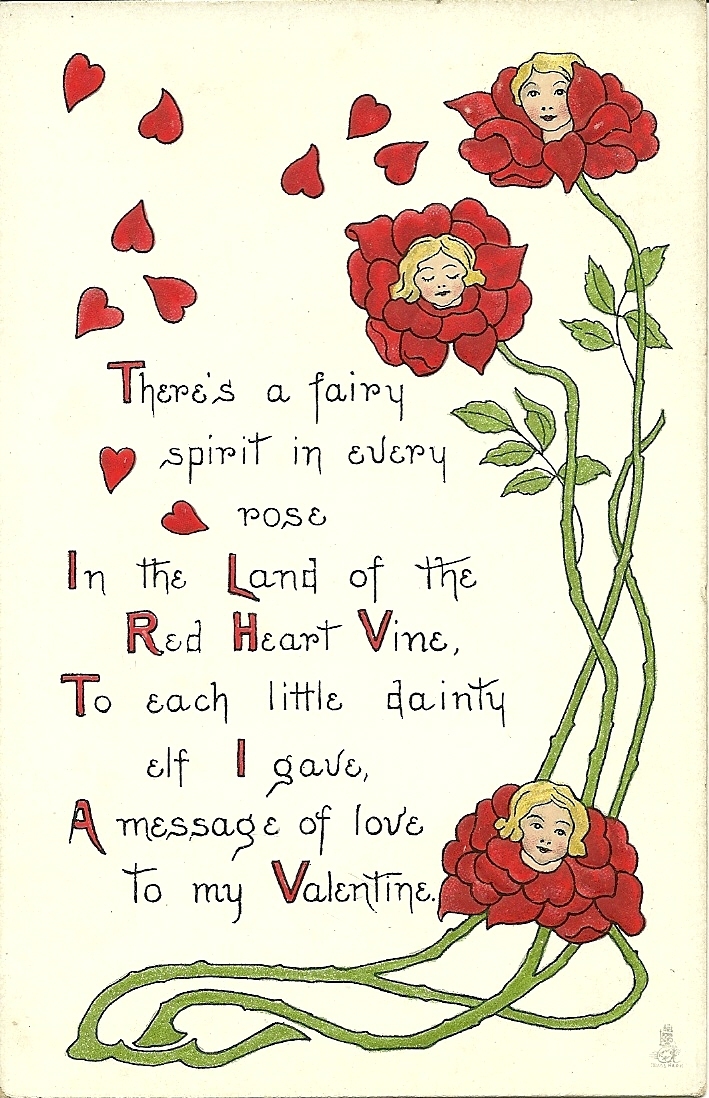
William Carlos Williams:

T.S. Eliot

Walt Whitman:

 Earlier this month, P&PC had the pleasure of attending and presenting at the Modernist Studies Association's annual conference held this year at the Hyatt Regency in the nearly post-apocalyptic downtown of Buffalo, NY. Themed around "The Structures of Innovation," there were your fairly predictable panels ("make it new," right?) on Gertrude Stein, James Joyce, DADA artwork, avant-garde little magazines, and the Paris and New York art and literary scenes. There was also a "roundtable" discussion, organized by Marsha Bryant and Alan Golding, that focused on the subject of "Rethinking Poetic Innovation" and had at least one person buzzing afterwards.
 MSA roundtables are a pretty fun format in which, rather than droning on in sequence with extensive prepared remarks, five or six invited speakers offer short position papers then open the floor for discussion with each other and the event's attendees. Imagine our pleasure and surprise when, this past spring, Bryant approached and entered into negotiations with the P&PC home office about P&PC's participation! Now imagine our lone P&PC representative sitting in front of an audience of seventy-five modernists (including keynote speaker Michael Davidson, Lynn Keller, Jed Rasula, and Dee Morris) and among the roundtable's cast of Bryant, Golding, Bob Perelman, Steven Yao, Elizabeth Frost, and Elizabeth Bergmann Loizeaux—all tenured profs, all well published, some of whom certain members of the P&PC home office staff started reading in graduate school lo these many years ago. Hands somewhat a-tremble, our stomach feeling more like a Kurt Schwitters collage (example presented above) than the proverbial nest of butterflies, but bolstered by the presence of a younger, up-and-coming, somewhat iconoclastic generation of modernist scholars including Meredith Martin and Bartholomew Brinkman, here's the perspective on "Rethinking Poetic Innovation" that P&PC offered. (N.B. If you're a regular P&PC reader, well, bless you; the following is nothing you haven't heard from our offices before. We're posting it not for your benefit but for those at the conference—get this—who admitted to having never before heard the name of Edgar Guest.)
 In the late nineteenth and early twentietth centuries, Americans regularly assembled and maintained poetry scrapbooks—personal verse anthologies that edited together poems cut out of newspapers, magazines, church bulletins, advertisements, greeting cards, and other print sources, oftentimes sampling in news articles, pictures, photographs, die cuts, or other items. Well known writers like Anne Sexton, Mark Twain, Walt Whitman, e.e. cummings, Carl Sandburg, Edna St. Vincent Millay, and Marianne Moore kept such albums. Over the past six or eight years, I have assembled and studied an archive of 150 or so poetry scrapbooks produced by ordinary or less celebrated readers. The photocopy I’ve distributed here today (pictured above) is a page spread from one of those albums—a 230 page-long, 300-poem collection kept in the late 1920s and early 1930s by Doris Ashley, an unmarried sawyer’s daughter in her early 20s who was living just south of Boston.
 It’s an interesting document, as Ashley puts four “modern” poems, including the now iconic poems by Pound (“In a Station of the Metro,” located at the bottom of the second page) and H.D. (“Oread,” located in the middle of the first page), in conversation with two popular poems and a news report on H.L. Mencken’s late-life marriage to Sara Haardt (a published writer who, in the 1910s, was a prominent voice lobbying the Alabama state legislature to ratify the nineteenth Amendment). The juxtapositions are compelling and represent a vernacular cut and paste analogue to, if not precedent for, modernist practices of bricolage or collage, as Ashley reads across or through a highbrow-lowbrow divide and very compellingly pairs up the Pound and H.D. poems, which are frequently combined in our histories of modern poetry but which her original source book, Louis Untermeyer’s 1925 edition of Modern American Poetry, did not print together.
 If Ashley recognizes the shared poetics of “In a Station” and “Oread,” she is not limited by them. In fact, what most connects the six poems here is the image of the tree—the pear tree in Millay’s poem, the pines in “Oread,” the maple tree in Anne Campbell’s poem, the “wet, black bough” in “In a Station,” and the rain of Stanton’s “A Rain Song” that waters them all. This arboreal conceit extends thematically to the newspaper article—the seasons, gardens, plants, and flowers offer an appropriate landscape in which to read about Haardt’s latish marriage (she was 31); astonishingly, this conceit extends sonically, as well, as the “wet, black bough” of Pound’s poem echoes the subtitle of the Mencken article: “Noted American Bachelor Finally Bows to Cupid.” (Note: Ashley, an aspiring writer, would, like Haardt, remain unmarried until her late 20s, and P&PC reads this page spread, in part, as an articulation of how and why Ashley justified remaining single as a life choice that was more deliberate than prevailing images of spinsterhood would suggest.)
 There is certainly more to discuss about this page spread, including the alternative map through the poetry of modern America that it and other such anthologies suggest, as well as its place in the history what Kenneth Goldsmith is calling uncreative writing. (Food for thought: can we call Ezra Pound [pictured here] a “popular poet” when he appears in a scrapbook alongside poems by popular poets Stanton and Campbell? Campbell, by the way, was a poet for the Detroit News who reportedly made $10,000 per year off of the daily publication and syndication of her poetry in the 1920s and 1930s.) I’m presenting these pages here, however, to help forward four ideas that might help us to rethink poetic innovation. Those ideas are as follows:
 1. Future work on poetic innovation needs to include more study and theory of innovative reading as well as innovative writing.
 3. Although Ashley’s scrapbook doesn’t suggest it directly, poetic innovation within popular and mass culture likely intersected with, and affected, the work of “literary” poets more regularly than we think—not just in terms of raw materials, but form, precedent, and logic as well. When we use the French word collage to describe modernist literary practices, for example, we disguise modernism's roots in popular practice and overlook the fact that Pound, H.D., Moore, William Carlos Williams, T.S. Eliot and others were born in, learned to read in, and were educated in an America where scrapbooking was a primary form of reading and thinking and where the word collage did not yet exist.
 The P&PC Office has just downloaded the Poetry Foundation's cool iPhone app, and we love it. In the Foundation's words, the new app means "you can now take hundreds of poems by classic and contemporary poets with you wherever you go," but we're less interested in this portability—which simply extends a long tradition of pocket editions and pocket anthologies into the digital age—than we are in how the application itself is structured around traditionally popular ways of poem reading instead of the Modernist ones that first gave Poetry its street cred.
 If you are into the individual talent or the individual masterpiece, this app does give you—via a little window at the top of the screen—the ability to search for specific "poems and poets," but that method of poetry finding takes a distinctly secondary back seat to others: you can more easily browse poems by "mood" or "subject" or, if you press a "spin" button or simply shake your phone, the app randomly cross-indexes moods and subjects to produce a catalog of poems along thematic lines (as in the first image above). We just shook the tax-deductible office iPhone, for example, and came up with a list of poems themed around the intersection of "Optimism" and "Work and Play." A second shake gave us "Passion" and "Nature." A third gave us "Worry" and "Youth." Surprisingly, for a little magazine that has come to be associated with individual talents and poetic personalities, the new app is pretty author-free: as the "spin" results in the image pictured above indicate, moods, subjects and titles are far more crucial to the app's operation and use than the author names that dominate the organization of classroom anthologies like the Norton or even the table of contents for Poetry magazine itself (see Vol. 1 No. 1 pictured below).
 The Poetry Foundation apparently knows, however, that author names and specific poem titles often pale in importance to subject matter, theme, or mood among a popular readership and so, in reaching out to that readership via the iPhone app, the Foundation has put on a distinctly popular face—a face that probably has Ezra Pound rolling (if not spinning) in his grave. (Try to imagine, for example, an anthology of Modernist poetry being structured around sections titled "Joy" and "Commitment"!) That is, after nearly a century of standing for modernist quality, taste and discrimination, Poetry has gone thoroughly middlebrow if not downright popular in its ambitions, and it's not the world of the little magazine but digital communication technologies—such as the Poetry Tool on the Foundation's web site and the iPhone app discussed here—that have taken it there.
 So, what are the implications of this finding system? For one, the iPhone app appears to completely disregard the importance of style, poetic voice, or school of poetic thought when it comes to poetry reading; the modernist call to originality (Pound's battle cry to "make it new") takes a back seat to an index that trucks in the vague categories that Pound cautioned against in the March 1913 issue of Poetry magazine when he wrote "Go in fear of abstractions." As its transhistorical themes suggest—Shakespeare, Christina Rossetti and Ella Wheeler Wilcox (pictured here) turn up together when our spin results in "Passion" and "Nature," for example—the app also foregoes categorization along the lines of literary periodization, disrupting the oftentimes Hegelian narratives of literary history that Poetry and Modernism depended on for literary cachet; thanks to Apple, AT&T, and the Poetry Foundation, all poetry—to misquote T.S. Eliot—is eternally present.
 The depreciation of style, the subordination of the individual talent, and the loss of a linear literary narrative results in a general homogenization of poetic history that might leave Harold Bloom, the avant-garde, the English major, and the M.F.A. student at a loss for what books and dissertations to write next. But with the removal of brow lines, the disappearance of an aesthetic priesthood, and the waning aura of authorship and history alike comes a possible restoration or reconfiguration of the early 20th-century reader whom Joan Shelley Rubin has examined in Songs of Ourselves: The Uses of Poetry in America. In the day before scholars took it upon themselves to separate highbrow poetry from lowbrow poetry and genteel poetry from modern poetry, Rubin argues, Americans read eclectically, finding and using poems from various literary traditions and time periods for many different purposes, in the process becoming "repositories of both the high and the popular—aware of, but not constrained by, a shifting boundary between them." If the Poetry Foundation is reaching out to touch someone, this is the reader it's likely got in mind.
 Make no mistake, P&PC is not claiming that the Poetry Foundation iPhone app is the new beacon of popular poetry reading, although it does improbably contain eight poems by one Edgar Guest, the "people's poet" of the Detroit Free Press (pictured to the left) who would have never fit with Poetry during his lifetime, although he was awarded an honorary degree by the University of Michigan—a school that had bestowed the same honor on Robert Frost. However, we are enthused by the new sets of categories which encourage readers to apply poems to their lives and not just to their term papers and GRE tests, and we like the restoration of affect to poetry reading that this suggests. (We're also very curious, btw, about the process of designing the app.) Combined with the "spin" feature—which makes us think of a disc jockey playing records on a turntable—these aspects of the poetry app make us feel like we're holding and carrying around a sort of portable, poetry mix-tape generator. Maybe that means an audio version will be available soon?
 Jane Austen has met the zombie. So has Abraham Lincoln. The Poetry & Popular Culture Office has been nearly, uh, dying to know what happens when zombies meet poetry as well. And so, when we discovered Ryan Mecum's two books, Zombie Haiku (2008) and Vampire Haiku (2009), we turned to haiku expert Ce Rosenow (pictured here), hoping to, well, pick her brain about what happens when the living dead (pictured below) turn to seventeen syllables for self-expression. Here, in the first installment of a two-part review of what we can only call Mecum's re-animated body of work, Rosenow fleshes out the hunger for poetry and horror that seems to run (where else?) in our blood.
 Zombie Haiku's blood-spattered pages and zombie photos will resonate with readers who are familiar with typical visual representations of zombies—the lurching gait, outstretched arms and vacant eyes are all present here. In addition to that nod toward iconic zombie imagery, Zombie Haiku also acknowledges the cinematic and literary genre of which it is part. Night of the Living Dead, for example, is present, if understated, in the farmhouse and cornfield sequences that show up in Mecum’s narrative.
 However, Zombie Haiku requires that readers overcome two obstacles. First, they must suspend a certain amount of disbelief—and it’s not disbelief about zombies’ existence. No, the disbelief that arises when reading this collection stems from the book's central premise: a reanimated dead person insatiably hungry for human brains and other body parts who chooses to document the search for said parts using, of all things, a poetic form that requires counting syllables. This counting can’t come easy for the zombie. After all, as he becomes increasingly driven in his search for human flesh, he admits in neat, seventeen-syllable sound bites that he has trouble remembering things:
 Fortunately, such apparent contradictions are easily overlooked in literature. Consider, for example, Samuel Richardson’s heroine in Pamela who ostensibly composed the letters that comprise this 18th-century novel even as she locked herself behind various doors to avoid her employer's sexual advances. Clearly people—even the living dead—will document their lives regardless of trying circumstances. And with the zombie, whose body parts become damaged and sometimes fall off altogether, these circumstances tend to grow increasingly difficult:
 Filling the pages of his journal with poems and drawings representing his experiences clearly takes dedication.
 Haiku, however, are as trendy as zombies, and so the idea to bring the two together is not surprising. Haiku have, for the last three decades at least, been used repeatedly to address popular topics—sports, business, movies, teen angst—and to suggest a cutting edge approach to these topics. They typically ignore most characteristics of literary haiku and focus only on the 5-7-5 syllable count. Mecum’s haiku fit well into this new tradition but raise a question about this new approach in general: why choose haiku at all? In Mecum’s case, why not zombie limericks, zombie sonnets, an occasional zombie sestina? Why reanimate the haiku form yet again for something so far afield from the form’s actual purpose?
 Perhaps the answer lies in the fact that haiku entered American literature as a way to make non-haiku poetry more innovative. In the early 20th century, poets such as Ezra Pound incorporated aspects of haiku into non-haiku poems. As modernists, these poets searched for ways to reinvigorate conventional poetry, and haiku became one means to that end. Contemporary, non-literary uses of haiku may not be intended to reinvigorate poetry, but they might be designed to “make new” the treatment of their various topics nonetheless.
 Finally, if seventeen syllables is all it takes to make a haiku, another possible answer might be that the form is simply an amusing, undemanding way to write. It also matches the ever-decreasing attention span of many readers and accommodates a wide range of topics.
 Each zombie eventually ends up with his own victim but not through any form of teamwork, and, afterwards, each zombie continues on his own individual quest for more food.
 The book parades this incongruity throughout the text. The most notable instance occurs in the following depiction of the zombie’s obsession with brains and syllables:
 I recently watched Anthony Russo's 2006 movie "You, Me and Dupree" which stars Owen Wilson, Kate Hudson, and Matt Dillon. In the film, Wilson's character - Dillon's loveable but messy, reckless, fly- by-the-seat-of-his-pants best friend and best man - loses his job and moves in with newlyweds Hudson and Dillon only to introduce all manner of potty-humor and relationship chaos into the young lovers' household. Not exactly an art film. The narrative then follows Wilson's gradual reformation into a person of some refinement and charater and Dillon's corresponding descent into disorder, jealousy, and paranoia. Defending Wilson's improvements one night to her husband, Hudson reveals that Wilson has, in fact, been writing poetry - a revelation that Dillon reacts to by calling Wilson "a fag."
 In post-Cold War America, perhaps no figure has dramatized the stereotypical synchronicity between gayness and poetry more humorously than Percy Dovetonsils, one of the most remembered characters created by t.v. comedian Ernie Kovacs. Kovacs's Dovetonsils appeared as a "poet laureate" who spoke with a lisp, wore a zebra-patterned smoking jacket and coke-bottle glasses, and sipped a drink which had a daisy for a swizzle stick. Not able to abide the homosexual resonances of this long history on Wilson's poetry writing, "You, Me and Dupree" eventually clarifies Wilson's heterosexuality by informing us that he was, in fact, writing love poetry in order to win back the affections of a girl he lost earlier in the film.
 A fair amount of attention has been paid to the visual aspects of these idealized female images, but most commentators focus purely on the airbrushed visuals and the problematic images of the girl next door without investigating the constant presence of the poetry that accompanied those visuals and that, by association, must have had an impact on shaping American masculinity. Some of these poems, such as this one from an ink blotter picturing a busty showgirl in feathers and short skirt -
 Take into consideration the following quatrain from a postcard showing a cartoon redhead whose skirt - a la the famous pic of Marilyn Monroe - is blown up above a steam grate to reveal her stockings and garters:


 Posts
All Comments


